Add Row
Add Element
AI SuperCampus Biz Networking Updates
update
Business Networking AISuperCampus of AI Audibles
update
Add Element
  • Home
  • Category
    • Media Networking & Community Building
    • AI Marketing & Business Growth
    • AI Podcasting & Thought Leadership
    • ChatGPT + AI Tools in Education & Business
AI Super Campus dot com
UPDATE
July 01.2025
3 Minutes Read

Enhancing Your Commute: Discover HOV-Specific ETAs in Google Maps

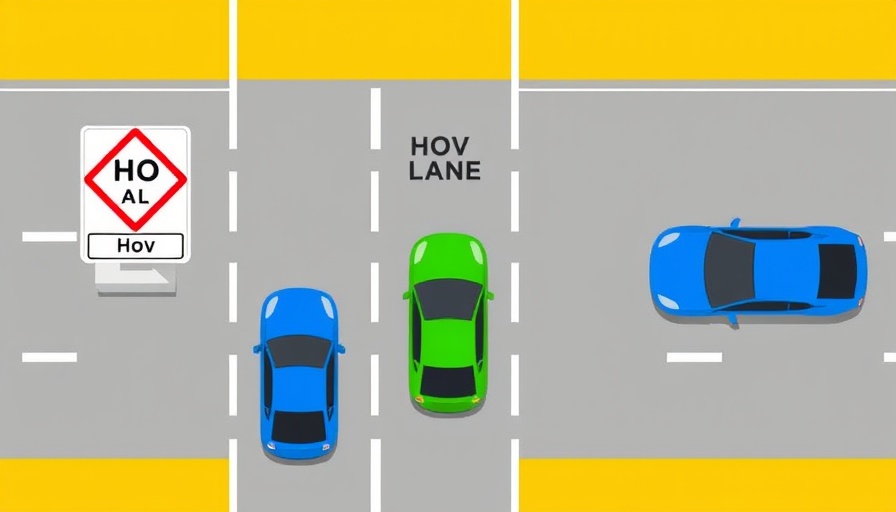
HOV lane entrance sign illustration depicting cars and lanes

How Google Maps Is Enhancing Your Commute With HOV-Specific ETAs

In a world where efficiency and sustainability have taken center stage, Google is once again leading the charge with an innovative update to Google Maps—HOV-specific estimated time of arrival (ETA) predictions. As more people shift towards greener transportation options like electric vehicles, carpooling, and public transportation, the need for precise travel information becomes increasingly essential. This development not only helps travelers save time but also significantly contributes to reducing congestion and emissions.

The Importance of HOV Lanes

High-occupancy vehicle (HOV) lanes are designed to optimize traffic flow during peak hours. In regions like Utah’s Salt Lake Valley, these lanes have proven to be faster. Data shows that vehicles in HOV lanes can travel at an average speed of 68.18 mph compared to only 58.60 mph in general lanes. Recognizing the difference in commute times between these lanes and general traffic is crucial to improving the traveling experience, making it vital for Google Maps to integrate HOV routing.

How Google Maps Developed HOV-Specific ETAs

Creating accurate HOV-specific ETAs was no simple task. Google used a novel classification approach to train models specifically designed to understand HOV traffic patterns. By analyzing aggregated and anonymized traffic data, they inferred past travel times of HOV lanes, allowing them to construct reliable ETA predictions.

Challenges in Classifying HOV Trips

Identifying whether a trip is an HOV trip can be tricky. The distinction is often obscured, especially when traffic is light. Factors such as time of day, location, and occasional road events also contribute to the complexity of classifying a trip as HOV or non-HOV. To tackle these challenges, Google employed an unsupervised learning approach that analyzes the trip details alongside rich data from similar trips in the same area.

Segment-Level Classification: The Technical Backbone

A significant component of the HOV ETA feature relies on segment-level classification. For each road segment that has HOV availability, Google processes trip parts from various users within a short time frame to classify their trips. Features like speed, vehicle position, and time of observation are crucial for understanding whether a trip qualifies as HOV.

The speed data proves to be especially valuable. When the speed patterns between HOV and non-HOV vehicles diverge considerably, the system can often detect a bimodal distribution in traffic speeds. Such insights allow Google to segregate the trips accurately and ensure the reliability of ETA predictions.

Future of Travel with AI Innovations

This enhancement in Google Maps aligns perfectly with the growing trend of AI tools in business and transportation. As we continue to navigate towards a future where artificial intelligence becomes intertwined with everyday commuting, Google’s integration of improved routing insights demonstrates the promise of AI education and community development in everyday solutions.

For any professional looking to stay ahead in the tech-driven world, familiarizing themselves with these AI advancements isn’t just beneficial; it’s necessary. Attending relevant networking events and engaging with other professionals can pave the way for new opportunities in AI innovation.

For more insights about AI’s evolving role in transportation and daily commutes, join the conversation on our platforms and learn how you can enhance your career in this exciting field!

AI Marketing & Business Growth

4 Views

0 Comments

Write A Comment

*
*
Related Posts All Posts
01.15.2026

How Hard-Braking Events Serve as Key Indicators of Road Safety

Update Road Safety Reassessed Through Data-Driven Insights In a groundbreaking initiative, researchers have revealed a compelling connection between hard-braking events (HBEs) and road segment crash risks. Utilizing data gathered from Android Auto, they established that roads with more frequent HBEs are likely to have a higher crash rate. Traditional assessments often rely on police-reported statistics for crash data, which only tell part of the story; these are lagging indicators and often fail to paint a complete picture of road safety. Understanding Hard-Braking Events So what exactly are hard-braking events? Simply put, an HBE occurs when a vehicle's forward deceleration exceeds a specific threshold, suggesting evasive action by the driver. These incidents can provide 'leading' indicators for road safety, offering insights that are actionable rather than purely retrospective. Imagine combining this data with insights from AI tools for business, leveraging software that learns and adapts over time to predict not just traffic patterns, but potential safety threats on our roadways. Why Current Methods Fall Short Historical crash data is sparse; it takes years to gather enough information to evaluate a road segment comprehensively. With crash occurrences being statistically rare, many areas lack the necessary data to inform safety policies effectively. This underscores the value of diversifying our methods of data collection. By analyzing up to ten years of combined crash data and HBE insights, researchers demonstrated that the data obtained through modern technology is not only more accessible but also potentially transformative for road safety. Statistical Modelling: Accuracy in Motion Researchers employed sophisticated statistical models to analyze patterns between HBEs and crashes, factoring in elements like traffic volume and type of road. The results were illuminating: higher frequencies of HBEs correlate with increased crash rates across various road types, from local streets to major highways. This correlation can serve as a critical tool for urban planners and transportation departments in prioritizing road safety improvements. The Future of Road Safety: AI Integration What does the future hold for road safety? Imagine a system where roads are equipped with AI-driven tools that not only track hard-braking events in real-time but also predict potential accident hotspots. These innovations could become vital components of any AI education strategy aimed at professionals in traffic management and urban planning. Driving Change Through Data This dialogue does not just end with understanding—it calls for action. Policymakers and city planners must integrate these findings into their frameworks, shaping safer communities. Implementing AI learning platforms for educating traffic professionals and engaging them through networking events could facilitate a more profound understanding of road safety data and its implications. Your Role in Road Safety As residents and professionals, we can advocate for the adoption of these advanced analytics to optimize road safety. Engaging in conversations about traffic safety, attending related AI networking events, or partaking in an AI community focused on innovation can accelerate the implementation of these findings into practical, life-saving measures.

01.14.2026

How NeuralGCM Transforms Rainfall Predictions with AI Technology

Update How NeuralGCM Transforms Rainfall Predictions with AI Technology Forecasting precipitation accurately has long posed challenges for climate scientists and meteorologists alike. However, a groundbreaking development called NeuralGCM combines artificial intelligence (AI) with traditional physics-based models, promising significant advancements in understanding global rainfall patterns and extreme weather events. This innovative approachto weather prediction is not only timely but essential as extreme climate events become more prevalent due to ongoing climate change. The Science Behind NeuralGCM NeuralGCM, introduced by Google Research, utilizes a hybrid model that integrates machine learning with classical fluid dynamics. By training on a vast dataset of precipitation observations from NASA satellites, it achieves remarkable accuracy in simulating the daily precipitation cycle, as well as extreme weather events. This fusion allows the model to generate forecasts that are not only more precise but also faster, generating outputs in a fraction of the time it takes traditional numerical weather prediction (NWP) systems. Fulfilling Real-World Needs with Precision Accurate rainfall predictions are critical for a variety of sectors, from agriculture to urban planning. For instance, farmers rely on precise forecasts to select optimal planting days, while city planners must prepare for severe storms that could lead to flooding. The NeuralGCM model significantly improves medium-range forecasts (up to 15 days) and has even shown to reproduce historical rainfall data across four decades better than its predecessors. Comparative Advantages Over Traditional Models Compared to traditional NWP systems, NeuralGCM excels in capturing nuances often overlooked in coarser models, particularly due to its ability to learn from small-scale atmospheric processes such as cloud formation. This is particularly notable in regions where atmospheric conditions can change rapidly over short distances, making high-resolution forecasts not just beneficial but necessary. Similar advancements have been noted in other AI-driven models, which have reported success in reducing precipitation error and enhancing the prediction of extreme weather events–a crucial factor in climate resilience. Enhancing Climate Understanding and Preparedness The implications of NeuralGCM extend beyond mere forecasts. With climate change increasingly influencing weather patterns, understanding these dynamics can help communities better prepare for extreme events. For example, studies have indicated AI models can track atmospheric rivers—concentrated corridors of moisture that lead to significant rainfall, especially on the West Coast of the United States. This capability highlights the potential for AI models to not only improve accuracy in forecasting but also bolster the resilience of communities and natural ecosystems. The Path Ahead: Merging AI and Climate Research As AI technology continues to evolve, the potential applications in climate prediction and understanding are expansive. Future research could investigate how innovations in AI can further enhance weather forecasting, making predictions more reliable and accessible. Additionally, the ongoing refinement of AI algorithms stands to benefit coastal communities adapting to rising sea levels and fluctuating precipitation patterns. With a growing body of evidence supporting the benefits AI can bring to climate science, the ongoing collaboration between models such as NeuralGCM and traditional research methods will be key to navigating future climate challenges. In conclusion, the NeuralGCM model represents a significant leap toward harnessing the power of AI in climate science. By effectively combining machine learning with established physical principles, this model not only enhances our understanding of precipitation but also provides actionable insights for a future increasingly affected by extreme climate variability.

12.20.2025

Discover How Google Research’s AI Innovations Shape the Future Today

Update The Magic Cycle of Research: Igniting Innovation and Impact In 2025, Google Research stood at the forefront of technological advancement, driving critical breakthroughs that provoked transformative impacts across various sectors, from product design to societal concerns. This 'magic cycle' of research not only accelerated knowledge generation but also ensured that these discoveries were woven into the fabric of everyday applications, tackling urgent challenges and enhancing our understanding of the world. Artificial Intelligence: The Heart of Change A key element of Google's progress was its substantial investment in AI, particularly in developing generative models that are not just efficient but also factual and multilingual. These innovations form a backbone for Google products, integrating intelligence that simplifies user interactions and drives accuracy. For instance, the introduction of Gemini 3 allowed AI tools to interact with data from over 140 languages, reinforcing the importance of inclusivity and accessibility in AI. AI in Education: Shaping the Future Integrating AI into educational frameworks marks a significant step toward personalized learning experiences. Through initiatives like Learn Your Way, Google is transforming static educational materials into dynamic, interactive experiences. Students utilizing this technology reported notable improvements in retention rates, demonstrating how AI can reshape educational outcomes and hopefully narrow gaps in learning. Quantum Computing: A New Era Google's strides in quantum computing coupled with its innovative 'Quantum Echoes' algorithm underscore its commitment to breaking new ground in scientific discovery. The potential implications of this technology span various disciplines, paving the way for advancements in fields like drug discovery and environmental science. It showcases how the fusion of AI and quantum capabilities could unlock solutions to complex global challenges. Insights from Global Collaborations Google's collaborative efforts with academic institutions and global partners showcase the importance of shared knowledge and resources in enhancing research outcomes. Initiatives aimed at democratizing AI tools are fostering communities where individuals can collectively engage in AI education, hence elevating standards and creating networking opportunities vital for professional growth. AI Tools for Business: Moving Towards Efficiency With tools designed to optimize operations, companies are charting new territories in efficiency through technological integration. Products driven by AI, like Google's AI co-scientist, facilitate revolutionary changes in research methodologies across various domains, underscoring the significance of AI as a partner in the realm of scientific inquiry. Bridging Knowledge Gaps with AI Communities Building an inclusive AI community is paramount for fostering innovation. Platforms that encourage business networking in AI are crucial as they provide professionals opportunities to share insights, tools, and strategies, cultivating a richer collective knowledge base. Such communal learning environments enhance exposure to novel ideas and practices, empowering individuals' career development in an ever-evolving tech landscape. Whether you are a student seeking to enhance your learning methods or a professional eager to understand the latest in AI innovations, these developments indicate the exponential trajectory of technology and its implications in our daily lives. The drive towards making AI accessible, effective and responsible is a journey that all should be part of, ensuring we collectively advance towards a smarter future. Explore these opportunities for learning and connection today!

Terms of Service

Privacy Policy

Core Modal Title

Sorry, no results found

You Might Find These Articles Interesting

T
Please Check Your Email
We Will Be Following Up Shortly
*
*
*